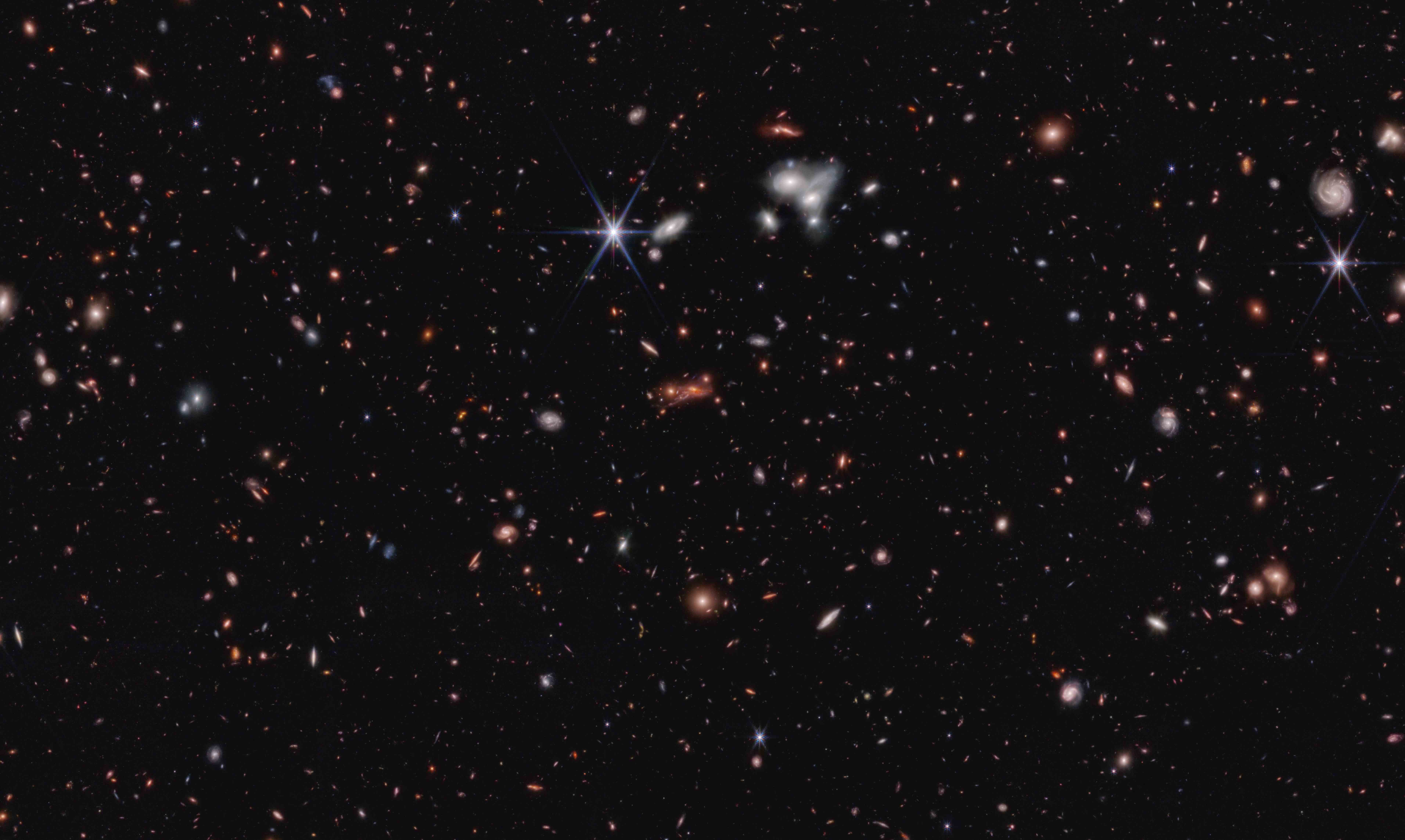
The first galaxies
Finding and characterizing galaxies seen just a few hundred million years after the Big Bang. Much of our work measures the rest-frame UV luminosity function at high redshift and confirms early galaxies spectroscopically — including some of the earliest galaxies known, such as Maisie's Galaxy — to test how quickly the first galaxies assembled.
- 2026Deep Spectroscopic Follow-Up of Maisie's Galaxy -- A Typical Galaxy in the Early Universe
- 2024The Complete CEERS Early Universe Galaxy Sample: A Surprisingly Slow Evolution of the Space Density of Bright Galaxies at z ~ 8.5–14.5
- 2023CEERS Key Paper. I. An Early Look into the First 500 Myr of Galaxy Formation with JWST
- 2022A Long Time Ago in a Galaxy Far, Far Away: A Candidate z ~ 12 Galaxy in Early JWST CEERS Imaging
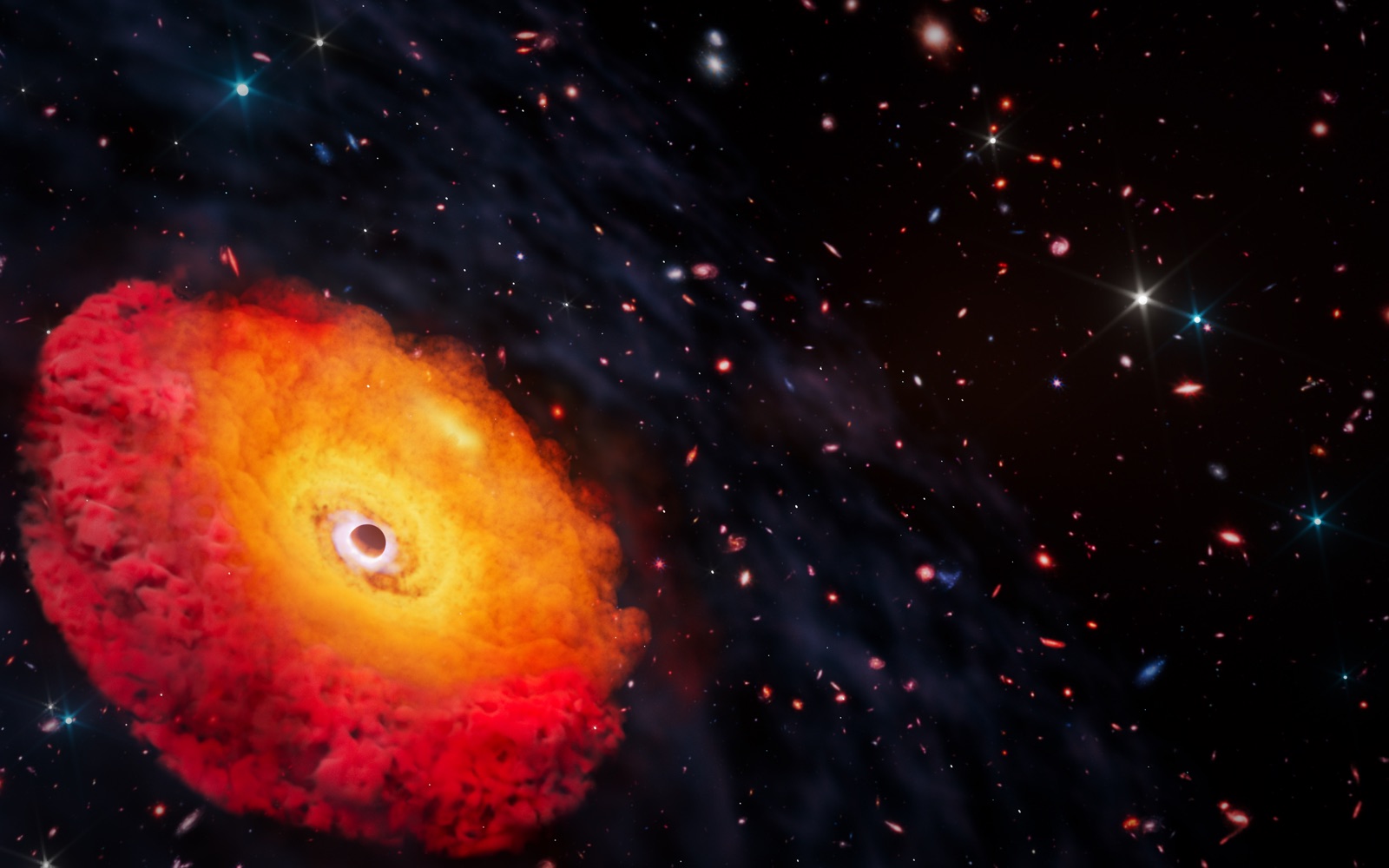
Black Holes and Little Red Dots
JWST has revealed a surprising population of "little red dots" and the most distant active black holes yet found — including CAPERS-LRD-z9, the earliest confirmed black hole. We study how the first supermassive black holes were seeded and how they grow within their host galaxies in the first billion years.
- 2026A Rapid Evolution in the Observed Mbh/M* Relation at z > 3 Revealed via Spectro-photometric SED-Modeling
- 2026Significant Evidence of an AGN Contribution in GHZ2 at z = 12.34
- 2026The Ashes of Supermassive Stars: Globular Cluster-like Aluminum Enhancement in Little Red Dots
- 2025Broad-line AGNs at 3.5 < z < 6: The Black Hole Mass Function and a Connection with Little Red Dots
- 2025CAPERS-LRD-z9: A Gas-enshrouded Little Red Dot Hosting a Broad-line Active Galactic Nucleus at z = 9.288
- 2025The Emerging Black Hole Mass Function in the High-redshift Universe
- 2023A CEERS Discovery of an Accreting Supermassive Black Hole 570 Myr after the Big Bang: Identifying a Progenitor of Massive z > 6 Quasars
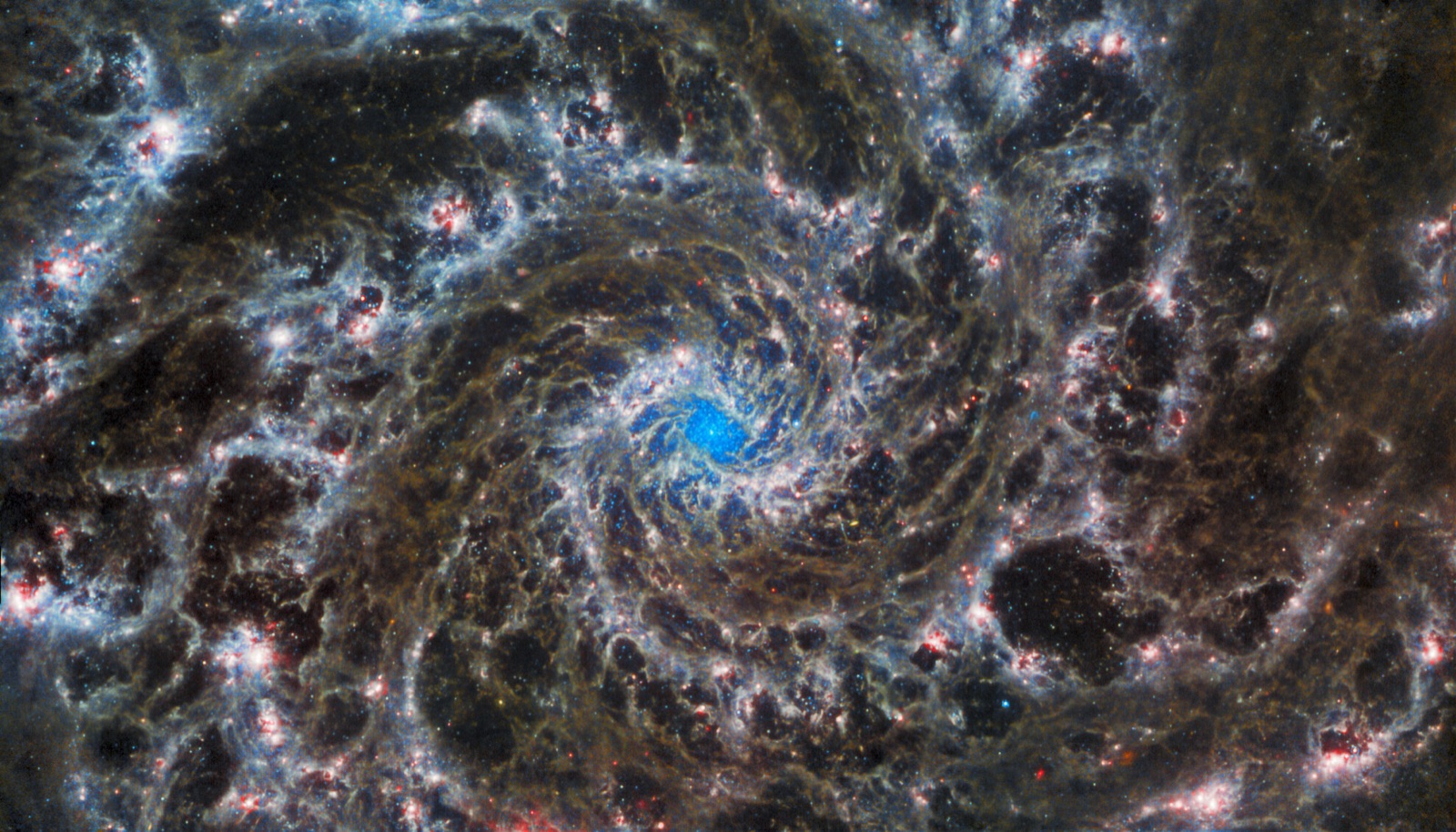
The growth of galaxies
How do galaxies build their mass and structure over cosmic time? We study the abundance of massive galaxies at early times and the physical properties of galaxies — star-formation histories, sizes, and morphologies — to connect the first galaxies to the mature systems we see today.
- 2026A Glimpse of the Low-Mass End of the Direct Mass-Metallicity Relation at z~6-8
- 2026Massive Galaxies Form Early and Gray: Stellar Assembly and Dust Attenuation at z>3.5 from CAPERS
- 2026An Optical Illusion: High Electron Densities Create Extremely Metal-Poor Galaxy Impostors
- 2025Primordial rotating disk composed of at least 15 dense star-forming clumps at cosmic dawn
- 2024Evidence for a Shallow Evolution in the Volume Densities of Massive Galaxies at z = 4–8 from CEERS
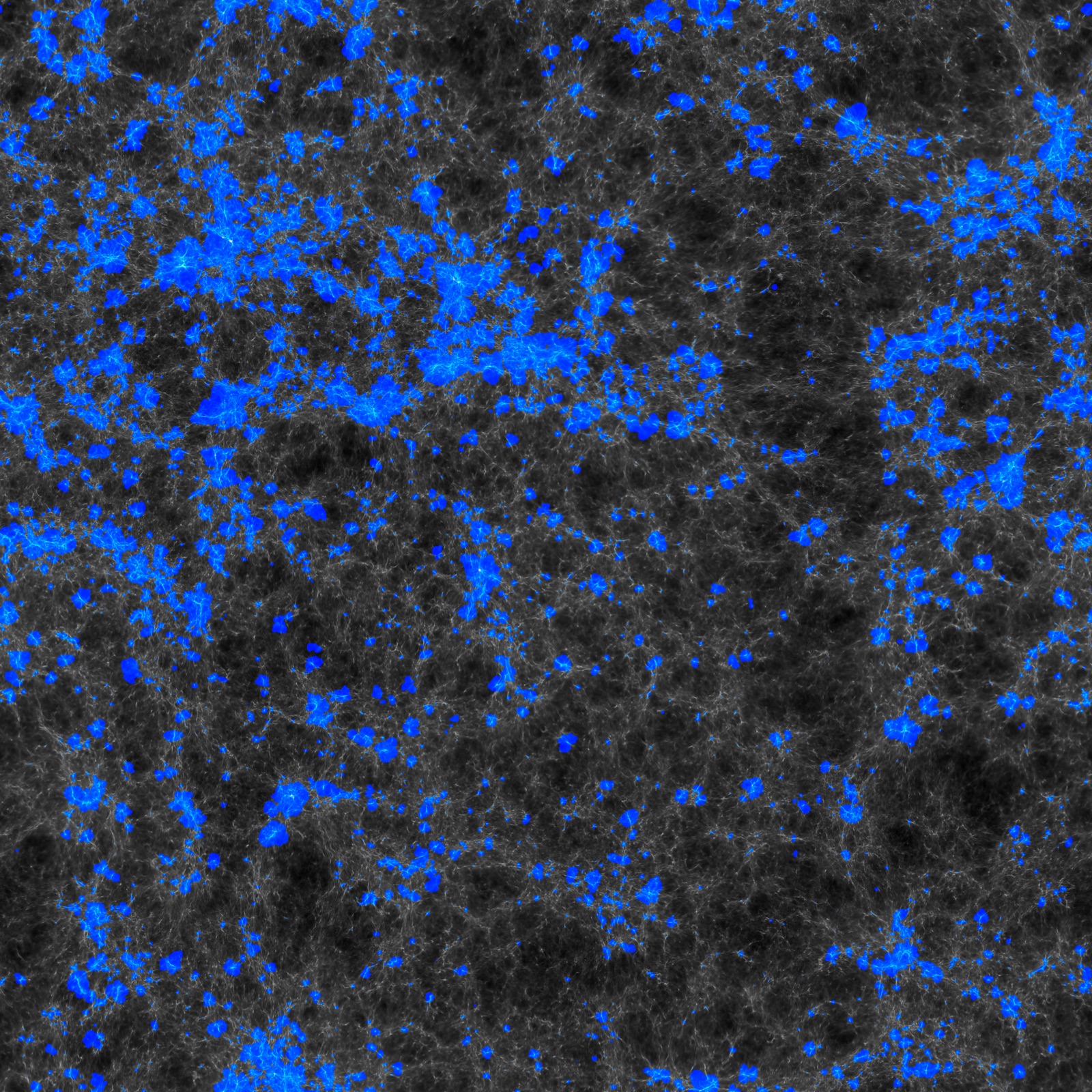
Reionization
How did galaxies and accreting black holes reionize the intergalactic medium, ending the cosmic dark ages? We use Lyman-alpha emitting galaxies and measurements of the ionizing-photon escape fraction (fesc) — from HETDEX and our own surveys — to identify which sources lit up the universe.
- 2023Introducing the Texas Euclid Survey for Lyα (TESLA) Survey: Initial Study Correlating Galaxy Properties to Lyα Emission
- 2022Searching for Islands of Reionization: A Potential Ionized Bubble Powered by a Spectroscopic Overdensity at z= 8.7
- 2020Texas Spectroscopic Search for Lyα Emission at the End of Reionization III. The Lyα Equivalent-width Distribution and Ionized Structures at z > 7
- 2019Conditions for Reionizing the Universe with A Low Ionizing Photon Escape Fraction