Galaxy
Evolution
VIP
Undergraduate research in galaxy formation and evolution at UT Austin. Develop an independent project with guidance from faculty, researchers, and fellow students.
Pandora’s Cluster · Webb NIRCam
NASA, ESA, CSA, Ivo Labbe (Swinburne), Rachel Bezanson (University of Pittsburgh); image processing: Alyssa Pagan (STScI)
About the program
GEVIP is a multi-year research program that brings together students across astronomy, physics, and related fields. Students learn astronomical data analysis, read scientific literature, develop a capstone proposal, and carry out novel research with mentorship from the PI, postdocs, graduate students, and senior undergraduates.
Capstone projects
Research questions, methods, and results from individual student projects.
Five semesters
of research
The program begins in sophomore spring and continues through senior year, progressing from introductory training to an independent capstone project.
-
Sophomore spring
Training & group project
Complete introductory modules, begin a group starter project, and present results at the Undergraduate Research Forum (URF).
-
Junior fall
Capstone proposal
Finish the group project. Develop and propose an individual capstone research project.
-
Junior spring
Capstone research
Begin the capstone project and present preliminary results at the URF Symposium.
-
Senior fall
Analysis & results
Continue the capstone project. Students pursuing graduate school are encouraged to present preliminary results at AAS.
-
Senior spring
Final presentation
Complete the capstone project or final URF poster. Projects will result in an honors thesis, research note, or published paper.
Eligible students can enroll directly in AST211G in the spring semester; no application is required. See the FAQ for eligibility and program details.
Frequently asked
questions
Information about eligibility, coursework, time commitment, and research mentorship.
How is GEVIP structured?
Students who meet the prerequisites enroll in AST211G in the spring semester; no application is required. Sophomores work through training modules and a group starter project; during junior fall they read papers and develop an individual Capstone Project proposal; students then work on the Capstone until graduation.
Who can enroll in AST211G?
Prerequisites: sophomore standing; Astronomy 307 with a grade of at least B+; and Astronomy 376R, 275, or 375 with a grade of at least B+. Eligible students can enroll in AST211G in the spring semester.
Do I need coding experience?
Some Python experience and astronomical background are helpful, but not required. The first-semester coding modules are designed to bring members to a level where they can complete their first project and develop their own future project.
What data does GEVIP work with?
GEVIP works with a variety of datasets, including observations from JWST, Euclid, and HET.
How much time does research take?
GEVIP is a for-credit research group. Each credit hour corresponds to about three hours of work per week, and members attend at least two meetings each week.
What do students produce?
Members are expected to develop and conduct an individual Capstone Project and present at the Undergraduate Research Forum every spring. Students pursuing graduate school are encouraged to present at AAS in their senior fall; a Capstone can also lead to an AAS Research Note or a published paper.
What kind of mentorship is available?
Sophomores are paired with junior or senior mentors and a graduate student for their first project. Upperclassmen receive guidance from graduate students or postdocs on their Capstone, with regular Wednesday workshops for research problems and discussion.
What makes GEVIP different?
The vertically integrated structure gives undergraduates direct contact with graduate students, postdocs, the PI, and peers while they develop independent research interests and scientific communication skills.
People
Meet the students, faculty, and researchers in GEVIP, and learn about their research interests.
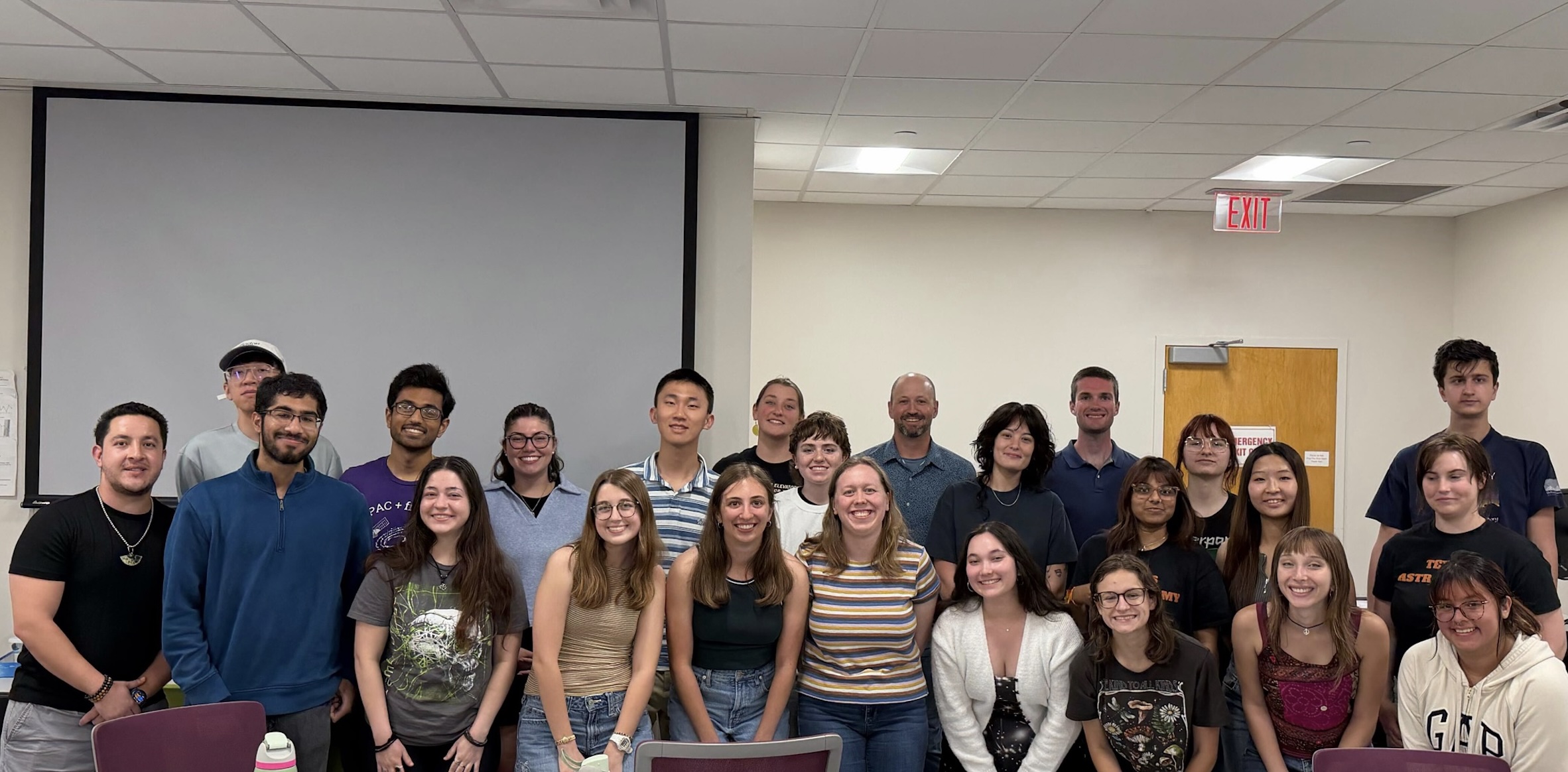
Group photograph currently unavailable.
Profiles for this category will be added soon.